
What Your Body Is Forced to Say: Scars as Involuntary Storytelling
4 min read
Asked to pick an animal, my answer was a panther – not for effect, but for what it reveals about power. Real power isn’t loud, visible, or performative; it’s quiet, watchful, and deliberate, grounded in observation, assessment, and precise action rather than reaction or display. What often gets misread as reservation or detachment is, in reality, selectivity and intent – an internal structure that operates with different standards, not a lack of engagement. It’s the difference between dominance and control, between force and restraint, between needing to be seen and choosing when to be present. Beneath a surface that might appear familiar or approachable is a fundamentally different way of moving – one that isn’t shaped by expectation, projection, or the need to be understood, but by clarity, decision, and purpose. The real insight isn’t the animal itself, but what it exposes: how you move when no one is watching, and the kind of power that reveals.
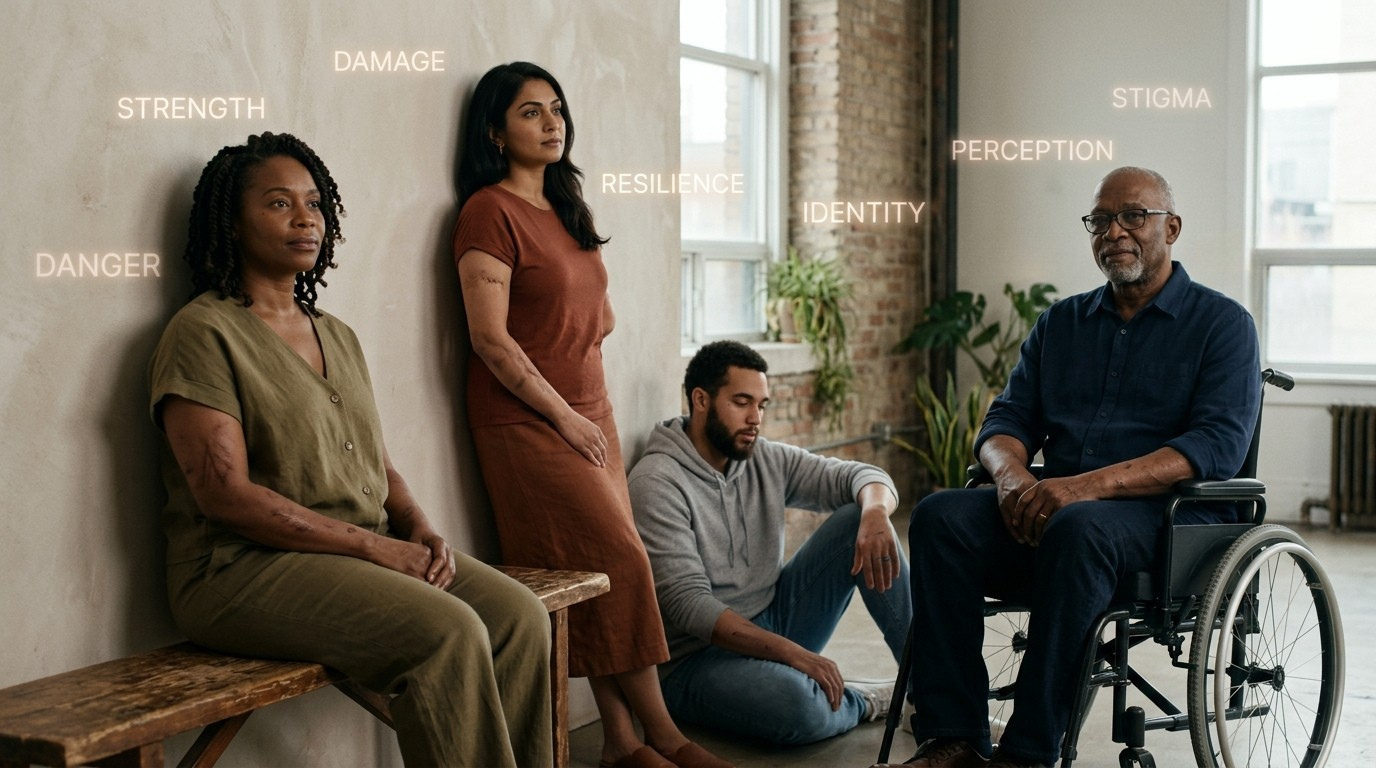
At some point, your body starts talking.
Not metaphorically.
Not poetically.
Literally.
Before you open your mouth, before you decide who you are that day, before you choose your tone, your outfit, your angle – your body has already said something.
And sometimes… it says too much.
Scars are strange like that.
Because they are both truth and assumption at the same time.
They are evidence of something – but not necessarily the thing people think. And yet, the moment a scar is visible, a story is written.
But not by you.
Because a scar says: Something happened.
But people decide: I know.
And that gap – between what is true and what is assumed – is where things get… uncomfortable.
Because now you’re not just existing.
You’re being read.
Some people see scars and think: Strength.
“You’ve been through something.”
Others see: Damage.
“What’s wrong with you?”
While others see: Danger.
“What kind of life have you lived?”
Same scar.
Different audience.
Completely different conclusions.
You are no longer just present.
You are someone with a story to account for.
Expected to translate yourself on demand.
Because we’ve normalised the idea that visible things are:
explainable things.
That if something can be seen, it can be known.
And if it can be known, it can be asked about.
And if it can be asked about, it should be answered.
So here’s the part that no one really acknowledges:
Once the scar is visible, the story is no longer fully yours.
People feel entitled to it.
Not always aggressively.
Sometimes softly.
Casually.
Curiously.
Sometimes without words.
Someone notices something on your body.
A scar.
A mark.
Something slightly out of place.
And they ask:
“What happened there?”
As if your body is a public document.
As if your history can be requested on sight.
As if visibility is permission.
And suddenly, it’s hard to push back.
Because your body has already become:
clues
prompts
openings
Because the question isn’t just: “What happened?”
It’s:
“Tell me the story your body is hinting at.”
So now you have a choice.
Do you tell the truth?
Do you simplify it?
Do you make it palatable?
Do you lie?
Do you refuse?
Every option costs something.
Because the question itself has already done the thing –
it has positioned you as someone who must explain.
And that’s the quiet shift.
A scar doesn’t just mark that something happened.
It turns you into a narrator.
Whether you want to be or not.
Even if the story is:
complicated
unfinished
painful
boring
or simply not something you feel like revisiting on a Tuesday afternoon
But what’s more unsettling is this:
the story people tell themselves about your scar doesn’t require your input.
You can say nothing… and they will still decide.
You can tell the truth… and they may not believe it.
You can minimise it… and they may exaggerate it.
You can own it… and they may still reduce you to it.
Because scars don’t just sit on the body.
They sit in other people’s imagination.
And imagination is rarely neutral.
It’s shaped by everything else people believe.
About pain.
About resilience.
About who is allowed to be fragile.
About who is expected to endure.
Which means the same scar does not travel equally across bodies.
On some people, a scar becomes: Proof of survival.
On others, it becomes: Proof of instability.
On others: Proof of threat.
Nothing about the scar changed.
Only the person carrying it.
And this is where I pause slightly.
When people say scars should be worn with pride… or that they’re proof of a life lived…
Sometimes they are.
And sometimes they are just… a mark.
A record.
A trace of something that happened and healed in one way, but not necessarily in every way.
A scar doesn’t tell you:
how long it took
what it cost
whether it should have happened at all
whether the person is okay now
It tells you the wound closed.
That’s it.
Everything else?
Is projection.
And maybe that’s the real tension.
Not that our bodies tell stories.
But that they tell stories we don’t fully control.
Because there is a difference between:
Choosing to share your story
and
having your body share it for you
And once you see that difference…
you start to notice it everywhere.
Not just with scars.
But that’s another post.