
Show the System or Sit Down™: A Framework for Resisting Aestheticised Injustice, Narrative Cowardice, and Radicalism in Vibes Only
4 min read
A familiar dishonesty in public discourse is one that performs empathy while avoiding the structures that cause harm. It shows pain but not profiteers, evokes hardship but hides the engine behind it, and gestures toward understanding while refusing responsibility. Show The System or Sit Down™ counters this by insisting on naming what dominant narratives conceal and refusing the silence that protects harm. When chaos appears without context, suffering without systems, pain without politics, or sympathy without accountability, stories shift blame onto individuals while shielding the unnamed beneficiaries. Emotional optics then appear, recasting power as victimhood through choreographed displays of fragility and diversion. And whenever power, profit, policy, policing, patriarchy, property, or privilege are left out of the frame, the result is spectacle rather than truth. Exposing the system ends the performance that sustains harm by demanding honesty in places where people gesture at struggle while refusing to name the forces that keep it in place.


There’s a particular kind of dishonesty that thrives in our time – a performance of radicalism that gestures toward struggle while refusing to name the structures that produce it. It shows us pain, but not the profiteers. It evokes hardship, but not the mechanism behind it. It performs empathy but does not provide accountability.
Show The System or Sit Down™ is my response.
It is both a call-out and a useful tool – a framework designed for anyone tired of storytelling that looks politically conscious but refuses to do the political work.
If you are done with vibes masquerading as analysis, this framework is for you.
Systemic Witnessing
To show the system is to witness what dominant narratives try to erase. It is more than critique – it is record-keeping, truth-telling, and refusal to be complicit in harm caused by omission. Because when harm is systemic, silence becomes complicity. And complicity, in public discourse, is often disguised as neutrality, “empathy”, or “not wanting to get political”. But everything is already political. The only question is whether we are willing to name it.
Radical Vibes, Cowardly Narratives
Too much of our media and public discourse tries to feel radical without being radical. We see this in the:
portrayal of chaos without context
highlighting of suffering without the structure
depicting of pain without the politics
offering sympathy without accountability
When systems aren’t named, individuals are blamed. Audiences get aesthetic, not analysis. And the story becomes moral theatre rather than structural truth.
But storytelling without beneficiaries is clerical illusion. If a policy, event, or harm is described without naming who profits, you are not being shown the truth - you are being shown a sanitised record. Absence is not neutrality; absence is protection because an unnamed beneficiary is an unchallenged beneficiary. That is how harm reproduces.
Questions That Keep Things Honest
If the work claims to “show” something, ask:
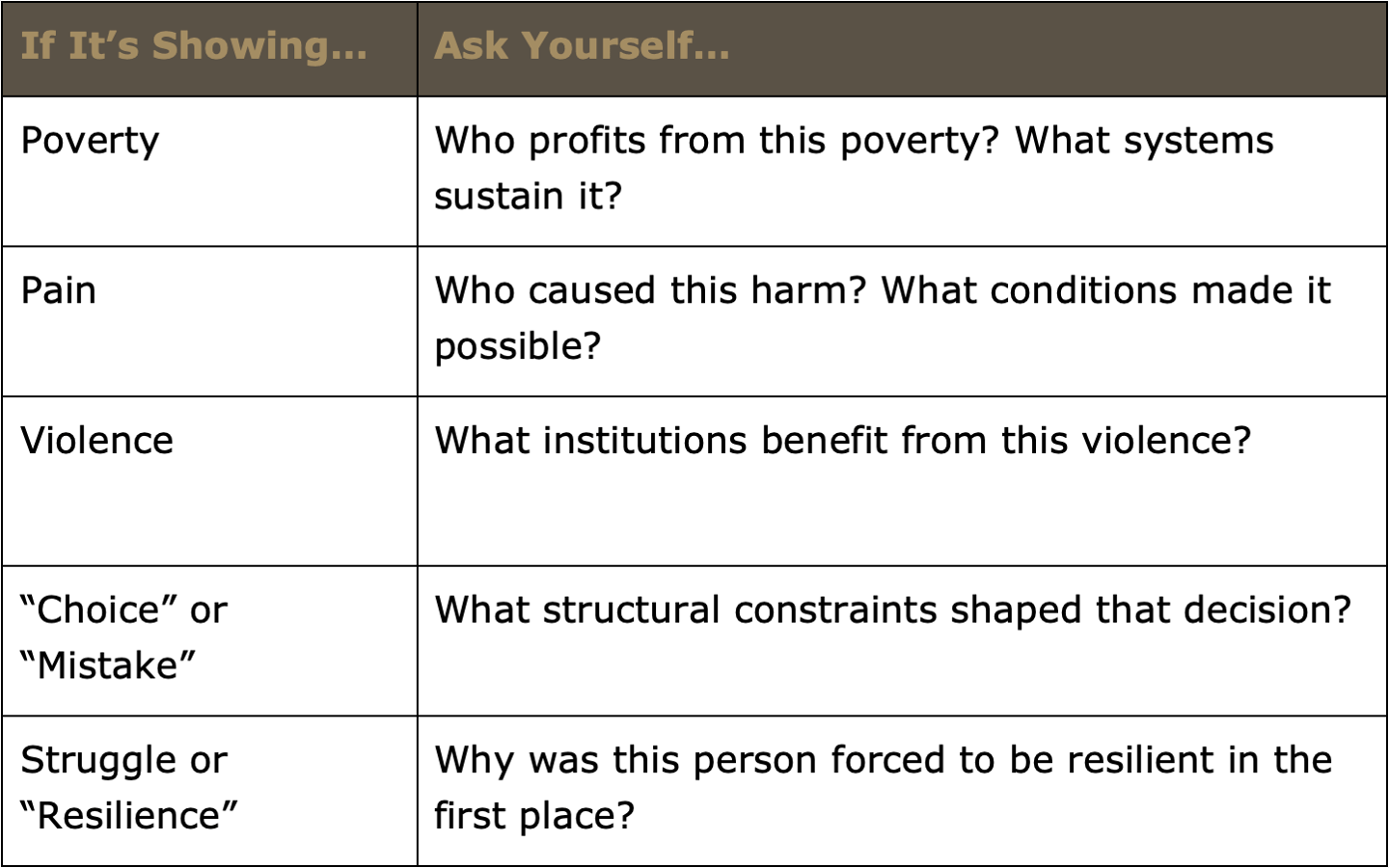
If the work cannot answer these questions, it needs to sit down. Start again. Because often instead of naming systems, people do the following:
Emotional Redirection: “Look how hard it is for them.”
Individualisation: “They made bad choices.”
False Balance: “There are two sides to every story.”
Systemic Shrinkage: “They were in their room. On the computer.”
Vague Morality: “We all need to do better.”
Each one of these keeps the spotlight soft and the system untouched.
The Optics Swap
Likewise, when conversations shift from structural accountability to emotional sympathy, optics are being performed and truth is not being told. It is the moment when power flips into victimhood to protect itself. And we’ve seen it in things like:
the weaponised affect of white tears
the corporate sentimentality of diversity statements
the moralised emotional evasion of “we’re all learning”
the performative reframing of critique as personal injury
the scale-denying reclassification of “this is personal, not systemic”
These types of display are not vulnerability. They’re choreography.
The Performance Trap
Show The System or Sit Down™ calls out the moments when we’re watching emotional theatre designed to protect the system. It names the point where people perform pain, fragility, outrage, or righteousness instead of naming power. It highlights when someone tries to look radical or oppressed while still benefiting from the privileges they refuse to acknowledge. And it makes clear that when people in power position themselves as the ones being harmed, we are not seeing justice – we are seeing a role they’ve cast themselves in to avoid accountability.
The Test
If the storytelling avoids:
Power
Profit
Policy
Platforms
Policing
Patriarchy
Property
Privilege
It’s not showing the system. It’s staging a spectacle.
When stories leave gaps, it’s important to ask who benefits from the explanation not being present. Gaps are rarely innocent. Omission is often a mechanism of protection. So is neutrality. Silence is never apolitical; silence is design. To name nothing is to maintain everything.
Reversing the Spectacle
Showing the system is not a neutral act. It stops the performance others were invested in continuing. Anywhere people are tempted to gesture at struggle while sidestepping power, this framework sets the record straight. Because performances protect power. But the whole truth exposes it.


What do you think...?
© It’s Nadine™ | Show The System or Sit Down™
For educational, analytical, and commentary purposes only. If referencing or teaching, please cite and attribute authorship.