
Radicalised Masculinity™: The Hidden Machinery Behind Modern Male Extremism
4 min read
Radicalised Masculinity™ identifies the systemic forces behind toxic masculinity, incels, and misogyny, tracing them to four engines – colonialism’s template of domination and white masculine hierarchy; religion’s moral policing and divinely sanctioned gender roles; capitalism’s fixation on productivity, status, and scapegoating; and neuro-political conditioning that suppresses reflection and rewards dominance. Together they drive a predictable progression from grievance to entitlement, ideology, group identity, enforcement, and extremism, producing familiar expressions such as enforcers, martyrs, resentful sons, proxies, performers, covert celibates, and digital crusaders. Systems rely on these radicals to police women, uphold desirability norms, defend capitalism, absorb blame, and sustain patriarchy without reform. Although radicalisation can break when manipulation becomes visible or gender expectations are refused, the system typically responds with intensified control, seen today in incel culture, tradculture, online misogyny, far-right recruitment, and religious revivals. Understanding male radicalisation as structural rather than individual is essential to challenging the forces that create and benefit from it.
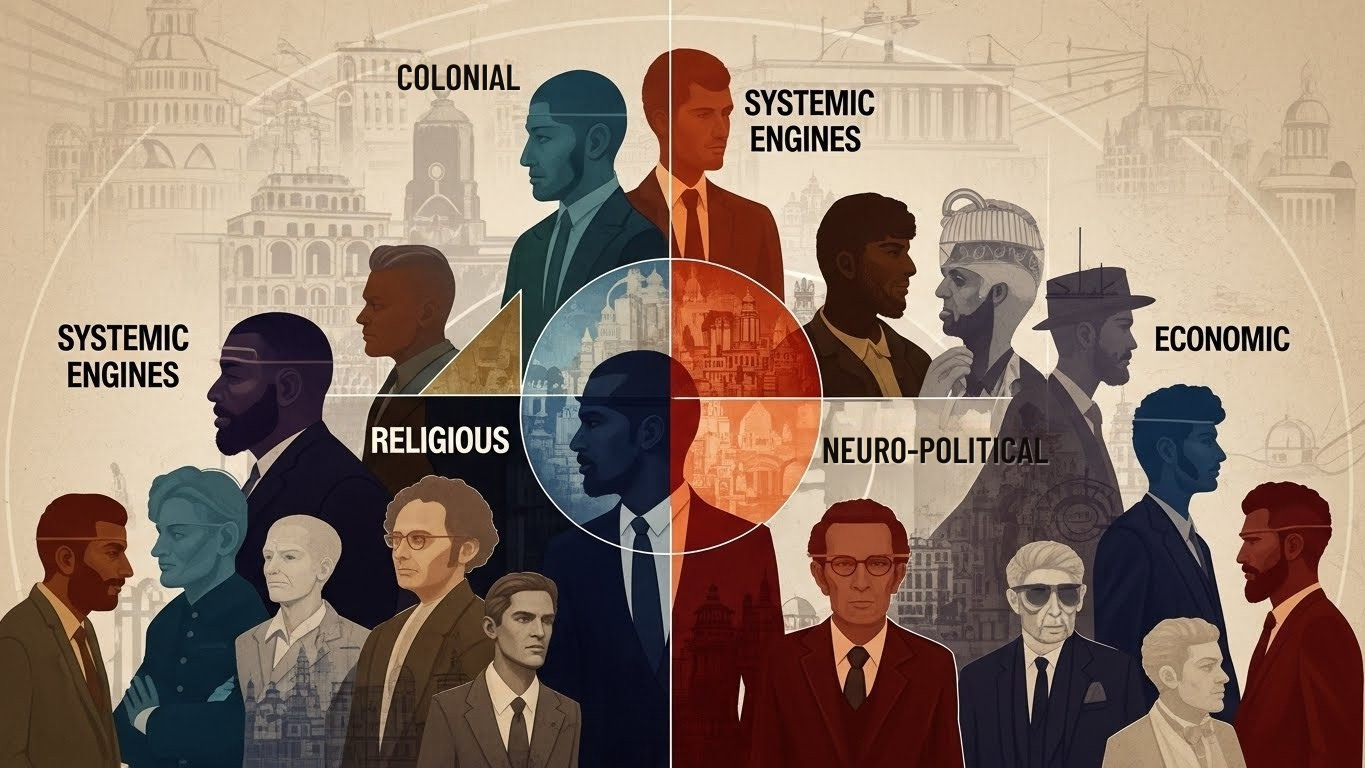
We talk a lot about toxic masculinity, incels, misogyny, male rage, the manosphere, machismo. But those words only ever describe the smoke, not the fire.
Radicalised Masculinity™ is the fire. It’s a way of understanding how masculinity becomes weaponised, polarised, and engineered into something extreme – not by accident, not by individual pathology, but by the systems that depend on male radicalisation in order to survive.
Radicalised Masculinity™ names the process – the political, colonial, economic, and religious infrastructures – that cultivate male grievance and entitlement so effectively that men end up defending the very systems that harm them.
The Four Engines of Radicalised Masculinity™
Masculinity doesn’t radicalise itself. It is radicalised through four interconnected engines.
1. The Colonial Engine
Colonialism didn’t just conquer land – it built an entire global masculinity template of:
domination
hierarchy
obedience
entitlement
moralised violence
Radicalisation wasn’t a by-product of empire. It was its operating system. With European colonisation of the global South, “white” masculinity became the prototype. Every other man was measured against it – and punished for deviation.
2. The Religious Engine
Here, masculinity is spiritually policed through:
purity culture
weaponised celibacy
eternal surveillance
gendered destiny
This engine radicalises through guilt, shame, and holy duty – powerful psychological levers few ever truly escape. Men inherit a divine script of authority, leadership, and control. Women inherit service.
3. The Economic Engine
Capitalism ties masculinity to:
productivity
provision
competition
status
punishment for failure
When men inevitably fall short of these unreachable ideals, the system hands them a ready-made explanation: women, feminists, immigrants, progressives – anyone but the system itself.
Grievance becomes ideology. And ideology becomes identity.
4. The Neuro-Political Engine
This engine works on men’s minds, not just their beliefs. Men are not naturally less reflective; rather, they are trained to abandon reflection.
Patriarchal socialisation rewards:
reactivity
certainty
externalisation
emotional suppression
performative dominance
This creates the perfect conditions for radicalisation through:
Deferred Intelligence™: men are shielded from the consequences of their thinking until it is too late.
Isolation: loneliness becomes fertile soil for extremist narratives.
Emotional illiteracy: the system fills the vacuum with ideology.
Authority outsourcing: men trust scripts, institutions, male leaders, and peer groups more than their own inner reality.
Weaponised boredom: meaninglessness becomes a gateway to extremism.
How Radicalisation Unfolds
Radicalised Masculinity™ can be seen to follow a predictable pathway:
1. Grievance → Entitlement
The world owes me – especially women.
2. Entitlement → Ideology
The system agrees. I should be dominant.
3. Ideology → Group Identity
Other men feel this too. It must be true.
4. Group Identity → Enforcement
Protect the system. Punish the dissent of women, queer people, progressive men – and even other men who soften or question the ideology.
5. Enforcement → Extremism
Online misogyny. Harassment. Violence. Dogma. Radical politics.
The 7 Faces of Radicalised Masculinity™
Radicalisation then expresses itself in the following familiar forms:
The Enforcer – policing women and punishing deviation
The Martyr – sacrificing everything for ideology
The Resentful Son – drowning in grievance
The Proxy Patriarch – enforcing control without power
The Performance Prince – seeking value through aesthetics and status
The Covert Celibate – weaponising self-denial
The Digital Crusader – radicalised through algorithms and fantasy
We see them everywhere. We name them individually. But they are all products of the same system.
Why Systems Need Radicalised Men
Because radicalised men are useful to the system.
They:
police women for free
enforce racialised desirability norms
defend capitalism
punish vulnerability
absorb blame meant for the system
exhaust themselves into compliance
convert their loneliness into loyalty
This is how patriarchy renews itself. The system doesn’t have to innovate or update itself to survive. It only has to continually radicalise men into thinking it’s natural, moral, and necessary.
When Radicalisation Fails
But sometimes, radicalisation doesn’t stick. And the failures tell us everything.
Radicalisation falters when:
men see the system manipulating them
the promised rewards never materialise
alternative narratives crack through
another man’s vulnerability disrupts the script
nourishing, reciprocal community replaces grievance
women refuse to play their assigned roles
When women pull away from patriarchal expectations, the system destabilises. However, instead of the expected collapse, it responds with intensified control – leading to escalation rather than decline.
Destabilisation → intensified male radicalisation → institutional reinforcement → temporary equilibrium.
We are experiencing this backlash now with:
incels
TradHusband/TradWife culture
algorithmic misogyny
anti-abortion movements
online male grievance politics
religious purity revivals
far-right recruitment and “manosphere” pipelines
Why This Matters
If we keep treating male radicalisation as an individual problem – instead of a systemic outcome – we will keep losing entire generations of men to grievance, ennui, rage, and extremist ideology.
Because men are not born radicalised, and they are not suddenly, randomly being radicalised inside man caves or chatrooms. Male radicalisation has been taking place inside the everyday systems that shape male identity.
Radicalised Masculinity™ is a way of not only naming what has been operating in the background, but of finally holding these systems accountable for the men they produce.


What do you think...?
© It’s Nadine™ | Radicalised Masculinity™
For educational, analytical, and commentary purposes only. If referencing or teaching, please cite and attribute authorship.